
Desk-Work Headaches and Neck Pain: The Connection Most People Miss
November 9, 2026 · By Dynamic Chiropractic
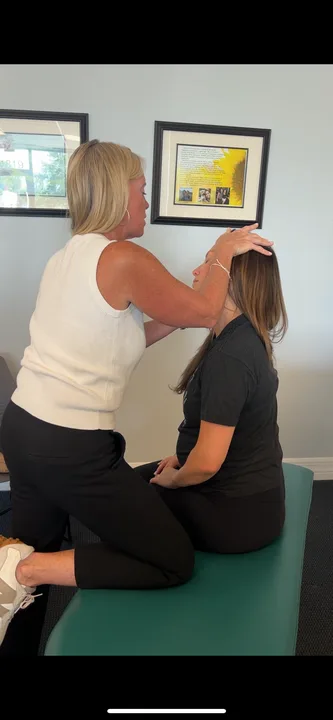
The short version: If your headaches arrive mid-afternoon, sit at the base of the skull or behind the eyes, and get better on weekends, your neck is a prime suspect. Tension-type headache is the most common headache there is, muscle tension in the neck is one of its best-known triggers, and the way most of us sit at a screen keeps that tension on all day. This post covers how the neck produces a headache, how to fix the desk, when a headache is not a neck problem, and what care at Dynamic Chiropractic looks like.
How a neck becomes a headache
The National Institute of Neurological Disorders and Stroke puts it simply: "Tension-type headache is the most common type of headache condition." It describes the pain as mild to moderate, like constant pressure on the head, face or neck, usually on both sides, and lists muscle tension in the neck, face, scalp and jaw among the common triggers.
The mechanics are not mysterious. Your head weighs roughly as much as a bowling ball. Balanced over the shoulders, the neck muscles barely work. Tilted forward toward a screen, those same muscles are holding a lever, and the small muscles at the base of the skull — the ones that attach right where that "headache spot" is — spend the day shortened and loaded. By 3 PM they're irritated, and irritated tissue there refers pain up and over the head. Add a jaw clenched over a deadline and you have the full picture.
The desk audit: six things to check today
OSHA's computer workstation guidance is the most practical free reference there is, and its first point is worth repeating — "There is no single 'correct' posture or arrangement of components that will fit everyone." But a few things are close to universal:
- Monitor: top edge at about eye level or slightly below, an arm's length away. A laptop on a desk fails this by definition — use a stand and a separate keyboard.
- Chair: feet flat, knees about level with hips, low back supported. If your chair tilts you forward, your neck compensates.
- Keyboard and mouse: elbows at roughly 90 degrees, wrists straight, close to the body. Reaching for the mouse rounds the shoulder, and the neck follows.
- Phone: never cradled between ear and shoulder. Headset or speaker.
- Second screen: directly in front, not off to one side you turn toward for hours.
- Breaks: stand up, look at something far away, and roll the shoulders every 30 to 45 minutes. The best posture is the next one.
When a headache is not a neck problem
Most headaches are benign. Some are not, and NINDS lists the ones that need a doctor right away: a sudden, severe headache; a headache with fever, stiff neck, confusion, weakness, double vision or loss of consciousness; a headache after a head injury; a new, constant headache in someone over 50; or a headache that keeps getting worse over days or weeks. If any of those describe you, that's a physician visit, not a chiropractic one. Migraine is its own condition too — it can coexist with neck tension, but neck care alone isn't a migraine treatment.
What chiropractic care does for it
When the exam points to the neck, care at Dynamic Chiropractic focuses on three things: restoring movement in the stiff joints of the upper neck and upper back, which are usually the ones that have stopped moving after months of a forward-head posture; reducing the load on the small muscles at the base of the skull; and changing the inputs — the desk, the phone, the breaks — so the problem doesn't rebuild by Thursday. Adjustments address the first; specific stretches and the desk audit address the rest. OrthoInfo notes that for many people, neck pain is a temporary condition that disappears with time; the goal of care is to shorten that time and keep it from coming back.
Whether the upper back is part of the problem matters: a stiff mid-back makes the neck do extra work, which is why our neck exam includes the thoracic spine and the shoulders. The same mechanics show up in our shoulder pain patients, often in the same people.
What to expect
The first visit is a history, a neck and upper-back exam, a check of the nerves that run from the neck into the arms, and a look at how you sit — bring a photo of your desk if you can. If imaging is warranted, Dr. Raby will say so. Our first-visit walkthrough covers the flow. Read more about how we approach headaches and migraines, neck pain and upper back pain, or book an appointment.
Frequently Asked Questions
Can a chiropractor help with migraines?
Migraine is a distinct neurological condition, and neck care is not a migraine treatment on its own. Where neck tension is a trigger or a companion to migraine — which is common — chiropractic care may help reduce that neck component. Dr. Raby will tell you at the exam which part of your headache picture the neck accounts for and which part needs a physician or neurologist.
How should I set up my desk to stop headaches?
Monitor top at eye level and an arm's length away, chair with your feet flat and low back supported, keyboard and mouse close with elbows near 90 degrees, no phone cradled on the shoulder, and a real break every 30 to 45 minutes. OSHA's free computer workstation guidance walks through each item with pictures.
How many visits will it take?
It depends on how long the neck has been stiff and how much of the day you spend loading it. Dr. Raby sets a plan after the first exam rather than before, with a checkpoint so you know whether it's working. Desk changes and home stretches usually shorten the number of visits more than anything done in the office.