
SoftWave for Shoulder Pain: Rotator Cuff, Tendinopathy and "Frozen Shoulder"
September 28, 2026
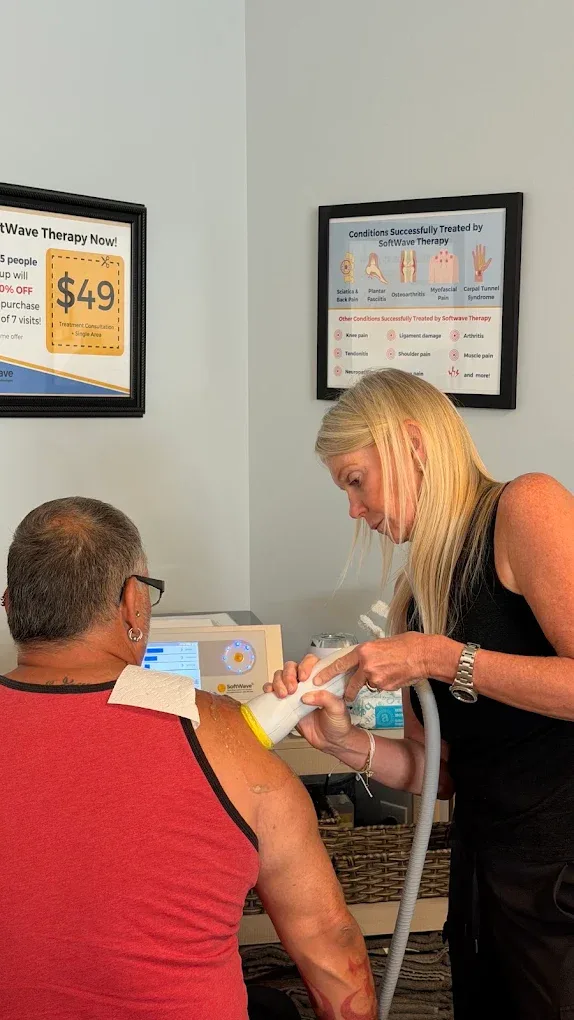
The short version: Shoulders are the number one reason people come to Dynamic Chiropractic for SoftWave therapy. Most shoulder pain that lingers for months is a soft-tissue problem — an irritated rotator cuff tendon, a bursa, a capsule that has tightened — and soft tissue is exactly what SoftWave is directed at. This post explains what's usually going on in a sore shoulder, why rest alone often doesn't fix it, what a SoftWave session does, and when you should get imaging before anyone treats you.
Why shoulder pain hangs around
The shoulder is the most mobile joint in the body, and it pays for that mobility with a heavy reliance on soft tissue. The rotator cuff — four muscles whose tendons wrap around the top of the upper arm bone — holds the joint centered while you lift, reach and throw. When those tendons get overloaded, they don't behave like a pulled muscle that heals in two weeks. Tendon has a poor blood supply, so it repairs slowly, and the shoulder is hard to truly rest because you use it to get dressed, drive and sleep.
The National Institute of Arthritis and Musculoskeletal and Skin Diseases puts it plainly: most shoulder problems happen when soft tissues in the shoulder break down. That includes tendinitis and bursitis (rotator cuff disease), partial or full tendon tears, and frozen shoulder.
The three shoulder problems we see most
Rotator cuff tendinopathy and impingement. The classic picture: a dull ache on the outside of the upper arm, pain reaching overhead or behind your back, and a shoulder that wakes you when you roll onto it. It often comes on slowly with no single injury — years of overhead work, swimming, tennis, or just age.
Partial tears. Rotator cuff tears can be sudden (a fall, a heavy lift) or degenerative, from gradual wear. OrthoInfo, the patient site of the American Academy of Orthopaedic Surgeons, notes that many rotator cuff problems are managed without surgery, with rest, activity changes, physical therapy and injections among the usual options. Which category yours falls into is an imaging question, not a guess.
"Frozen shoulder." Patients use this phrase loosely for any stiff shoulder. True frozen shoulder (adhesive capsulitis) is a specific condition where the joint capsule thickens and tightens, and it runs its own slow course. It's a different problem from a tendon problem and calls for a different plan, which is one more reason the exam comes before any treatment.
What SoftWave is designed to do
SoftWave therapy delivers broad, low-intensity acoustic pressure waves through a handheld applicator into the tissue under it. The device we use, the OrthoGold 100, is FDA 510(k) cleared for relief of minor muscle aches and pains, temporary increase in local blood circulation, and activation of connective tissue — our SoftWave overview walks through what that clearance does and doesn't mean.
For a shoulder, the practical appeal is coverage. Because the wave is unfocused, one session can address the whole cuff region — front, side and back of the joint — rather than a single point. The applicator also tends to be most noticeable over the tissue that's actually irritated, which helps Dr. Raby confirm the source of your pain rather than treating the general area.
What SoftWave is not: it is not a substitute for repairing a full-thickness tear that a surgeon says needs repair, and it does not "un-freeze" a frozen shoulder on its own. We'll tell you which situation you're in.
When imaging comes first
Get a shoulder looked at properly — not just treated — if any of these apply:
- A specific injury (fall, sudden pull) followed by weakness lifting the arm
- Inability to raise the arm past shoulder height at all
- Pain that has lasted more than a few months with no change
- Numbness or tingling running down the arm
- Night pain that's getting worse rather than better
Dr. Raby's exam will tell her whether an X-ray, an MRI, or an orthopedic referral is the right next step before SoftWave enters the picture. Bringing prior imaging or reports to your first visit saves a round trip.
What a shoulder session looks like
Ultrasound gel goes on, the applicator is placed on the shoulder, and a series of pulses is delivered while it's moved across the cuff, the front of the joint and the upper back where the shoulder blade muscles attach. You'll feel a firm, rhythmic tapping; it's stronger over the sore spots. The intensity is adjustable and set to what you can comfortably tolerate. There's no numbing and no downtime — you can drive yourself home and use the arm normally.
Some patients notice more freedom of movement right away; for others, the change shows up over the days that follow. The number of sessions depends on how long the shoulder has been a problem and how it responds, and Dr. Raby will lay out a plan after the first treatment, not before it.
SoftWave and chiropractic care together
A stiff upper back and neck often go hand in hand with a sore shoulder — when the thoracic spine doesn't rotate well, the shoulder blade can't glide properly and the cuff works harder than it should. That's where chiropractic adjustments and SoftWave complement each other: one addresses joint movement, the other the irritated soft tissue. Whether you need one or both is decided at the exam, and plenty of shoulder patients do SoftWave alone.
Getting started
The $49 new patient visit covers the consultation, the shoulder exam, any diagnostics Dr. Raby needs, and your first SoftWave treatment, so you find out whether it's a fit without a big commitment. SoftWave is self-pay and prices are subject to change; you'll get the numbers in writing before you decide on anything further. Book online or read more about shoulder pain care at Dynamic Chiropractic.
Frequently Asked Questions
Can SoftWave help if I've been told I need shoulder surgery?
It depends on why surgery was recommended. A full-thickness rotator cuff tear that a surgeon says needs repair is a surgical problem, and SoftWave doesn't change that. If the recommendation was for a tendon or bursa problem where surgery is one option among several, a conservative trial may be reasonable. Bring the imaging and the surgeon's notes; Dr. Raby will give you a straight answer at the exam.
How soon will I notice a change in my shoulder?
Responses vary. Some people feel more range of motion immediately after a session; for others the difference shows up over the following days. Long-standing tendon problems usually take a series of sessions. Dr. Raby will lay out a plan after your first treatment and tell you what a reasonable checkpoint looks like.
Do I still need chiropractic adjustments if I'm doing SoftWave?
Not necessarily. Many shoulder patients do SoftWave alone. If the exam shows the upper back or neck isn't moving well and is loading the shoulder, adjustments address that side of the problem. The two treatments do different jobs, and the exam decides which apply to you.