
Sciatica: Why the Pain Runs Down Your Leg and What Chiropractic Care Can Do
November 2, 2026
The short version: Sciatica isn't a diagnosis — it's a description of nerve pain that starts in the low back or buttock and runs down one leg. The usual cause is pressure on a nerve root from a disc or from wear-and-tear changes in the spine, most cases settle with conservative care, and a short list of symptoms means you should see a physician before anyone else. Here's how to tell what you're dealing with, what chiropractic care at Dynamic Chiropractic involves for it, and when we'd send you elsewhere first.
What sciatica actually is
The sciatic nerve is the largest nerve in the body. It forms from nerve roots in the lower spine, passes through the buttock, and runs down the back of the leg. When one of those roots is irritated or compressed, you feel it along the nerve's path rather than where the problem is. MedlinePlus describes it as pain, weakness, numbness or tingling caused by a problem with the sciatic nerve, usually on one side, often extending from the lower back down the leg.
OrthoInfo, the patient site of the American Academy of Orthopaedic Surgeons, is blunt about the word: "Sciatica is a very broad term describing nerve pain, not a specific diagnosis." The two most common causes it lists are a herniated disc, more typical under 40, and bone spurs or arthritis narrowing the space around the nerve, more typical later in life. The exam and sometimes imaging tell which one you have, and that matters, because the plan differs.
What it feels like
- Sharp, burning or electrical pain down the back of the thigh or calf, usually one leg
- Worse with sitting, coughing, sneezing or bending forward — all of which load the disc
- Numbness or pins-and-needles in the leg or foot
- Weakness: a foot that slaps, trouble rising on your toes, a knee that gives
- Low back pain that may be mild or absent — the leg is often the main complaint
When to see a physician first — not a chiropractor
A few symptoms change the picture from "irritated nerve" to "get this evaluated today." If you have any of these, go to a physician or an emergency department before booking with us:
- New difficulty controlling your bladder or bowels, or numbness in the groin and inner thighs
- Rapidly worsening weakness in the leg or foot
- Leg pain after a significant fall or accident
- Fever, unexplained weight loss, or a history of cancer alongside new back and leg pain
Dr. Raby screens for these at the first visit, and if any are present she refers rather than treats. That's the standard of care, not a disclaimer.
What chiropractic care does for sciatica
Most sciatica is managed without surgery. OrthoInfo's non-surgical list includes staying active, heat and cold, anti-inflammatories, stretching, physical therapy and, for some people, injections. Chiropractic care sits in that conservative group. The National Center for Complementary and Integrative Health describes spinal manipulation as "one of several nondrug approaches that may be used to treat acute and chronic low-back pain", and notes that for sciatica specifically the research is limited — some benefit in the short term in one study, less clear over a year. We'd rather you hear that from us than discover it later.
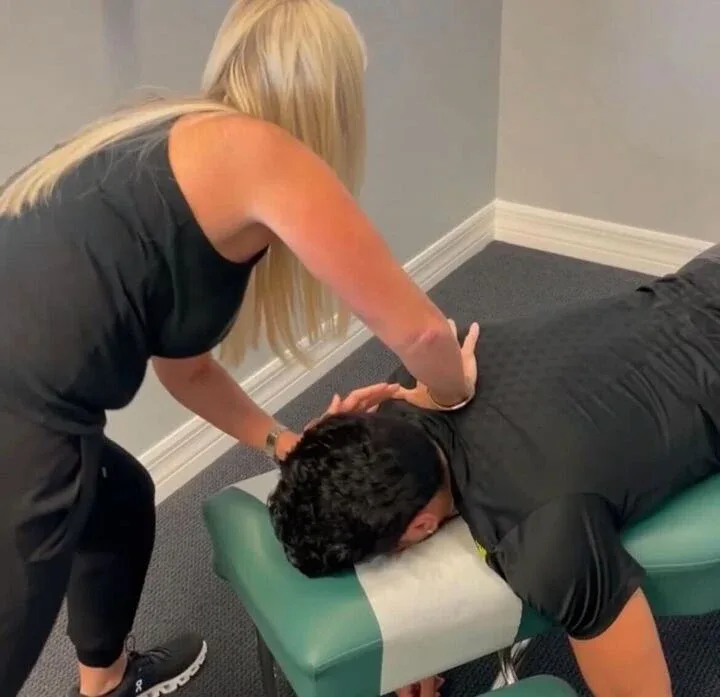
What a plan at Dynamic Chiropractic looks like in practice: adjustments aimed at restoring movement in the low back, pelvis and hips so the nerve root has more room and the surrounding joints stop compensating; specific stretches and positions for home that take pressure off the disc; and advice on sitting, lifting and sleeping — because an hour in the office is undone by eight hours in a bad chair. Progress is measured against your symptoms: how far down the leg the pain reaches (less is better), how long you can sit, whether the numbness is receding.
Dry needling, injections and medication are outside what we do; if your sciatica needs them, you'll be told.
What to expect at the first visit
History, a hands-on exam of the low back, hips and legs, neurological checks (reflexes, strength, sensation), and a review of any imaging you bring. If an X-ray or MRI is needed to see what's pressing on the nerve, Dr. Raby will say so and either order it or refer. The first-visit walkthrough covers the flow; for sciatica, bring any prior imaging and a note of which positions make the leg worse.
How long does it take?
MedlinePlus notes that sometimes sciatica goes away on its own; for the cases that don't, a conservative plan usually runs in weeks, not days, with a checkpoint built in so you're not continuing care that isn't changing anything. Read more about how we approach sciatica and lower back pain, or book an appointment if you've been living with leg pain long enough.
Frequently Asked Questions
Is sciatica permanent?
Usually not. Most sciatica is caused by a disc or wear-and-tear change pressing on a nerve root, and most cases improve with conservative care over weeks. What can persist is numbness or weakness if a nerve has been compressed for a long time, which is why rapidly worsening weakness or any change in bladder or bowel control needs a physician right away rather than a wait-and-see approach.
Should I stretch or rest with sciatica?
Mostly move. Prolonged bed rest tends to make sciatica worse, and OrthoInfo lists staying active among the first-line measures. Which stretches help depends on the cause: a disc-related case and a stenosis-related case often prefer opposite positions. Dr. Raby will show you the two or three that fit your exam rather than a generic list.
When is sciatica an emergency?
If you have new trouble controlling your bladder or bowels, numbness in the groin or inner thighs, or weakness in the leg that is getting worse quickly, go to an emergency department. Those can signal serious nerve compression that needs urgent evaluation. Leg pain after a major fall or accident, or back and leg pain with fever or unexplained weight loss, also needs a physician first.