
Plantar Fasciitis: Why Heel Pain Drags On and What Actually Helps
October 26, 2026
The short version: Plantar fasciitis is the most common cause of heel pain, it's notorious for dragging on, and the first-line fixes are unglamorous: calf stretching, better shoes, load management, and time. Most people improve with those. If you've done them properly for a couple of months and the heel still greets you every morning, SoftWave therapy is one of the conservative options worth discussing — with the honest caveat, which we'll get to, that the orthopedic literature on shockwave for this particular condition is mixed.
What plantar fasciitis is
The plantar fascia is a thick band of tissue running from the heel bone to the base of the toes, supporting the arch. When it's overloaded, the attachment at the heel becomes irritated. OrthoInfo, the patient site of the American Academy of Orthopaedic Surgeons, describes the result as a strong band of tissue that "becomes irritated and inflamed," producing heel pain.
The morning-pain pattern has a mechanical explanation: you sleep with your feet pointed down, which lets the fascia shorten overnight. The first steps stretch it abruptly, hence the stab under the heel that eases as you move. People who sit for long stretches get a version of the same thing when they stand up.
Risk factors OrthoInfo lists include a new or increased activity, repetitive impact (running, dance), long hours standing on hard floors, flat feet or high arches, tight calf muscles, obesity, and simply being between 40 and 60. Fort Lauderdale adds its own: a lot of walking in flat sandals, boat decks, and the year-round running and pickleball calendar.
Why it drags on
Two reasons. First, you can't rest a foot the way you can rest a shoulder — you stand on it all day. Second, the tissue itself has a poor blood supply and repairs slowly, so every day of overload sets recovery back. The American Podiatric Medical Association's heel pain guidance makes the point that heel pain that persists or limits your daily activities is the signal to get it looked at rather than waiting it out.
The other thing that makes it drag on is treating the wrong thing. Heel pain isn't always plantar fasciitis: a heel spur, Achilles tendinitis at the back of the heel, a nerve entrapment, a stress fracture, or excessive pronation can all present as "my heel hurts." The exam sorts those out.
What actually helps, in the order the experts list it
OrthoInfo's non-surgical list is long and starts simple: rest and activity modification, calf and plantar fascia stretching, ice, anti-inflammatories, physical therapy, supportive shoes and orthotics, night splints, and — further down — injections and other procedures. Cleveland Clinic frames the timeline honestly: "It can take anywhere from a few weeks to a few months for your plantar fascia to heal."
If you take one thing from this post: do the calf stretches, every day, for real. A tight calf pulls on the heel through the Achilles and keeps the fascia under tension. It's the least exciting recommendation on the list and the one most people skip.
Where SoftWave fits — and the honest caveat
SoftWave therapy delivers broad, low-intensity acoustic pressure waves into the tissue under a handheld applicator. Our device, the OrthoGold 100, is FDA 510(k) cleared for relief of minor muscle aches and pains, temporary increase in local blood circulation, and activation of connective tissue — our SoftWave explainer covers what that does and doesn't mean.
Here is the caveat we promised. Extracorporeal shockwave therapy has been used for plantar fasciitis for over twenty years, and some focused devices even carry FDA approval for chronic cases that failed conservative care (we cover approval vs. clearance in our SoftWave vs. shockwave post). But OrthoInfo's current guidance says the results for shockwave in plantar fasciitis "are mixed," and that it isn't commonly performed for that reason. We're telling you that because you'll find plenty of clinics that won't.
So where does that leave SoftWave? As a reasonable, non-invasive option to discuss after the basics have had a fair trial — not as a first step, and not as a promise. It's applied to the heel and arch and often to the calf as well, since the calf is usually part of the problem. Dr. Raby sets a plan after the first treatment and tells you what a fair checkpoint looks like, so you're not paying for open-ended sessions on a foot that isn't responding.
What a heel session looks like
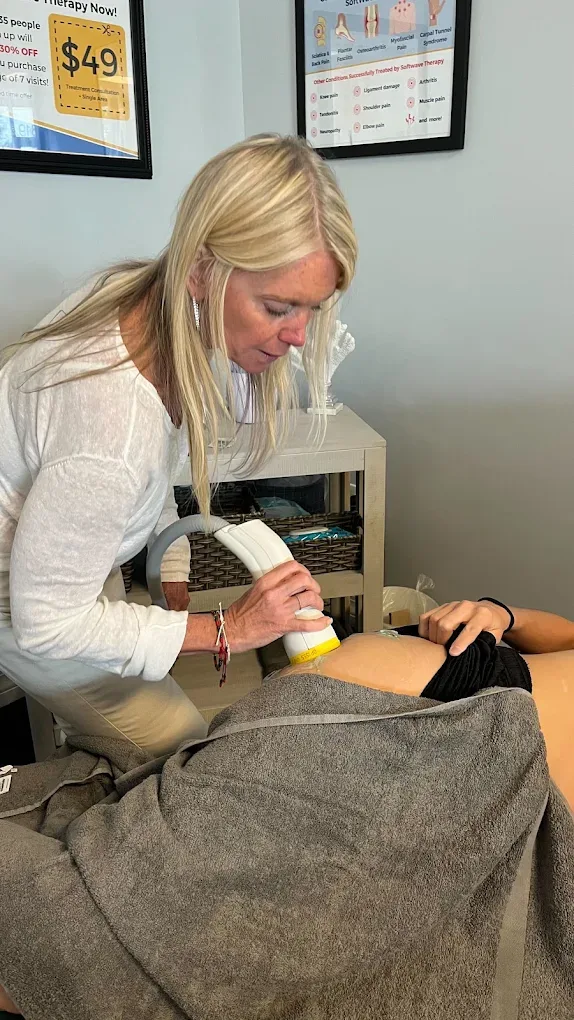
Ultrasound gel goes on, and the applicator is moved across the underside of the heel, along the arch, and up the calf if it's tight. You'll feel a firm, rhythmic tapping that's strongest right at the sore spot on the heel — that's expected. The intensity is adjustable and set to what you can tolerate; there's no anesthesia and no downtime. You walk out.
Getting started
The $49 new patient visit includes the consultation, a foot and lower-leg exam, any diagnostics Dr. Raby needs, and your first SoftWave treatment. Bring your shoes — the ones you actually wear most, not the good ones — and any imaging you have. SoftWave is self-pay and prices are subject to change; you'll have the numbers in writing before anything beyond the first visit. Book online.
Frequently Asked Questions
How long does plantar fasciitis take to go away?
Longer than anyone wants. Cleveland Clinic puts it at a few weeks to a few months with consistent conservative care, and OrthoInfo notes most people improve within several months of starting simple treatment. The single biggest variable is whether you actually do the stretching and footwear changes daily. If you've done them properly for two to three months without progress, that's the point to escalate.
Do I need orthotics for plantar fasciitis?
Not everyone does. Supportive shoes and over-the-counter arch supports are on every expert's first-line list; custom orthotics are worth considering when foot structure — very flat feet, high arches, marked pronation — is clearly part of the picture. Dr. Raby will tell you which you're dealing with at the exam, and she won't sell you something you don't need.
Is it my shoes?
Often partly. Flat, unsupportive footwear (flip-flops, worn-out sneakers, standing on hard floors in thin soles) is one of the most common contributors, and switching to shoes with a supportive arch and a cushioned heel is one of the cheapest fixes. Bring the shoes you wear most to your visit so Dr. Raby can look at them with you.